Can ChatGPT Replace Google Search?
Ever since ChatGPT became a household name, a common question has followed it everywhere: is this the end of Google Search? For many people, typing a question into ChatGPT and getting an instant, conversational answer feels like a more natural experience than scrolling through a page of blue links and ads. But does that mean ChatGPT can actually replace Google Search altogether?
The honest answer is: not entirely, and probably not anytime soon. The two tools are built for different purposes, and while there’s meaningful overlap, each has strengths the other simply can’t fully replicate. Let’s break down where ChatGPT genuinely outperforms search, where Google Search still has a clear edge, and how most people are realistically using both together.
How ChatGPT and Google Search Are Fundamentally Different
At their core, these two tools solve different problems.
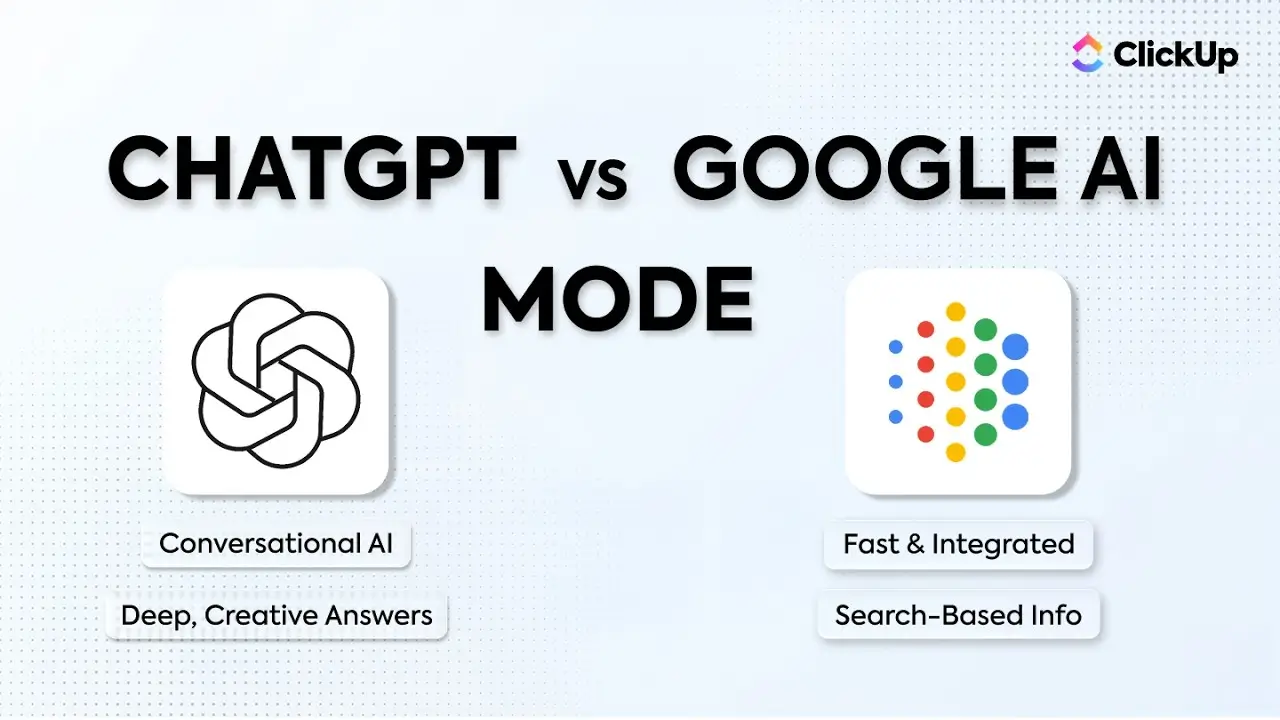
Google Search is an information retrieval system. It scans and indexes billions of web pages and shows you the most relevant existing sources based on your query. You get links, and it’s up to you to click through and read the actual content.
ChatGPT is a conversational AI model that generates responses based on patterns learned from large amounts of text data. Rather than pointing you to sources, it synthesizes an answer directly, in natural language, often tailored to follow-up questions and clarification.
This distinction matters because it shapes what each tool is genuinely good at.
Where ChatGPT Outperforms Google Search
Explaining Complex Topics Simply
If you want a concept broken down in plain language — like how blockchain works, or the difference between two similar technologies — ChatGPT can generate a clear, structured explanation in seconds, without you needing to piece it together from multiple search results.
Conversational Follow-Ups
ChatGPT remembers context within a conversation, so you can ask a question, get an answer, and then naturally follow up with “can you simplify that?” or “what about for beginners?” without starting over. Google Search doesn’t offer this kind of back-and-forth refinement in the same way.
Drafting and Creative Tasks
Writing emails, brainstorming ideas, drafting outlines, or getting help structuring a document are all tasks where ChatGPT genuinely does something Google Search was never designed to do — it doesn’t just find information, it creates content.
Summarizing and Synthesizing Information
Instead of reading five different articles to understand a topic, ChatGPT can synthesize a general overview based on its training, saving time when you want a broad understanding rather than exhaustive detail.
Where Google Search Still Has a Clear Advantage
Real-Time and Current Information
Google Search indexes the web continuously, meaning it can show you breaking news, live sports scores, current prices, and events happening right now. Standard ChatGPT responses are based on training data with a knowledge cutoff, so for anything time-sensitive, search remains far more reliable.
Verifiable Sources
When Google Search shows you a result, you can click through and verify who wrote it, when, and based on what evidence. ChatGPT’s answers, especially without browsing enabled, don’t come with the same built-in ability to trace claims back to a specific, checkable source.
Local Search and Maps
Searching for “coffee shops near me” or getting directions works far better through Google’s location-based search and Maps integration than through a general-purpose AI chat interface.
Shopping and Price Comparisons
Google Search excels at product listings, price comparisons, reviews, and shopping-specific features that are deeply integrated into its search ecosystem — something ChatGPT isn’t built to replicate natively.
Avoiding Inaccuracies (Hallucinations)
AI models can sometimes generate plausible-sounding but incorrect information, a limitation often referred to as “hallucination.” Google Search, by pointing you to existing content rather than generating new claims, carries less risk of this particular kind of error, even though the sources themselves can still be biased or wrong.
A Side-by-Side Comparison
| Task | Better Tool |
|---|---|
| Understanding a complex concept | ChatGPT |
| Checking today’s news or live scores | Google Search |
| Drafting an email or essay | ChatGPT |
| Finding a specific website or document | Google Search |
| Getting directions or nearby businesses | Google Search |
| Brainstorming ideas | ChatGPT |
| Verifying a factual claim with sources | Google Search |
| Having a back-and-forth conversation | ChatGPT |
| Comparing product prices | Google Search |
Has Google Responded to This Shift?
Google has incorporated AI-generated summaries directly into search results in many regions, blending the conversational, synthesized style of AI responses with its traditional link-based results. This suggests that rather than being replaced by AI, search engines are evolving to include AI-style answers as one part of a broader results page, rather than an either-or competition.
This blending trend is one reason many tech-focused sites, including apkmunna, have started covering how AI tools and search engines are increasingly working alongside each other rather than as complete replacements.
How Most People Actually Use Both Tools Together
In practice, many users have settled into a pattern that uses each tool for what it does best:
- Use ChatGPT for understanding concepts, drafting content, brainstorming, or getting a quick conversational explanation.
- Use Google Search for anything time-sensitive, anything requiring source verification, local information, or shopping.
- Cross-check important information by using ChatGPT for an initial explanation, then verifying specific facts or current details through a quick search.
This combined approach tends to be more effective than relying entirely on either tool alone, especially for anything where accuracy or timeliness genuinely matters.
Limitations to Keep in Mind When Using ChatGPT Instead of Search
- Training data cutoffs mean standard responses may not reflect the most recent developments, unless the specific version you’re using has live browsing capability.
- No built-in citations in many cases, making it harder to verify exactly where information came from.
- Occasional inaccuracies, especially with very specific facts, statistics, or niche topics.
- No real-time personalization based on your actual location, unlike Google’s location-aware search results.
Being aware of these limitations helps you decide when to lean on ChatGPT versus when a quick search is the safer, more reliable choice. If you’re curious about how different AI tools compare more broadly, apkmunna has additional breakdowns covering AI assistants and their practical use cases for everyday users.
Frequently Asked Questions
Is ChatGPT more accurate than Google Search?
Not necessarily. Google Search shows you existing sources you can verify yourself, while ChatGPT generates answers based on learned patterns, which can occasionally include inaccuracies. Neither is universally “more accurate” — it depends on the type of question.
Can ChatGPT access real-time information like Google?
Some versions of ChatGPT with browsing capability can access current information, but the standard model without browsing relies on data up to a certain training cutoff and won’t reflect real-time events.
Will ChatGPT eventually replace Google Search completely?
It’s unlikely in the near term. The two tools serve different needs — conversational synthesis versus real-time, verifiable information retrieval — and current trends suggest they’re increasingly being combined rather than one replacing the other.
Is it better to use ChatGPT or Google for homework and research?
ChatGPT can be helpful for understanding concepts and getting explanations, but for citing sources, verifying facts, or original research, Google Search (or academic databases) remains more reliable.
Do search engines use AI too?
Yes. Many search engines, including Google, have integrated AI-generated summaries and features directly into search results, blending traditional search with conversational AI-style answers.
Conclusion
ChatGPT and Google Search aren’t really competing for the exact same job — they’re complementary tools with different strengths. ChatGPT shines when you want something explained simply, drafted quickly, or explored conversationally, while Google Search remains essential for real-time information, source verification, local results, and shopping.
Rather than asking which tool will “win,” it’s more useful to think about which one fits the task in front of you. For most people, the smartest approach is using both together, leaning on each one for what it naturally does best. For more comparisons like this between today’s most-used tech tools, apkmunna is worth bookmarking for future reference.