Why Do Batteries Lose Capacity?
Table of Contents
- What “Losing Capacity” Actually Means
- The Basic Chemistry Inside a Battery
- Why This Chemistry Naturally Degrades
- Key Factors That Accelerate Capacity Loss
- Does Every Battery Type Lose Capacity the Same Way?
- Capacity Loss vs. Battery Failure
- Can Lost Capacity Ever Be Restored?
- How to Slow Down Capacity Loss
- When Capacity Loss Becomes a Real Problem
- FAQs
- Conclusion
Phones, laptops, electric cars, power tools, even rechargeable toothbrushes: almost everything with a rechargeable battery eventually holds less charge than it used to. It’s such a universal experience that most people simply accept it. But why do batteries lose capacity in the first place, and is there anything that actually slows this process down?
The answer comes down to chemistry. Rechargeable batteries rely on internal reactions that, by their very nature, cause small, permanent changes every time they’re used. Let’s look at what’s actually happening inside, and what you can realistically do about it.
What “Losing Capacity” Actually Means
Battery capacity refers to how much energy a battery can store and deliver when fully charged. When a battery is new, it can hold close to its full rated capacity. Over time, that maximum amount gradually shrinks, meaning the same “full charge” holds less usable energy than it once did.
This is why an older phone or laptop seems to drain faster throughout the day, even if your usage habits haven’t changed. The battery isn’t broken; it simply can’t store as much as it originally could.
The Basic Chemistry Inside a Battery
Most modern rechargeable electronics use lithium-ion batteries. Inside, these batteries store and release energy by moving lithium ions back and forth between two electrodes, the anode and the cathode, through a liquid or gel-like substance called an electrolyte.
- Charging moves ions from the cathode to the anode, storing energy.
- Discharging moves ions back from the anode to the cathode, releasing energy for your device to use.
This back-and-forth movement is what makes a battery rechargeable in the first place, but it’s also the root cause of its eventual decline.
Why This Chemistry Naturally Degrades
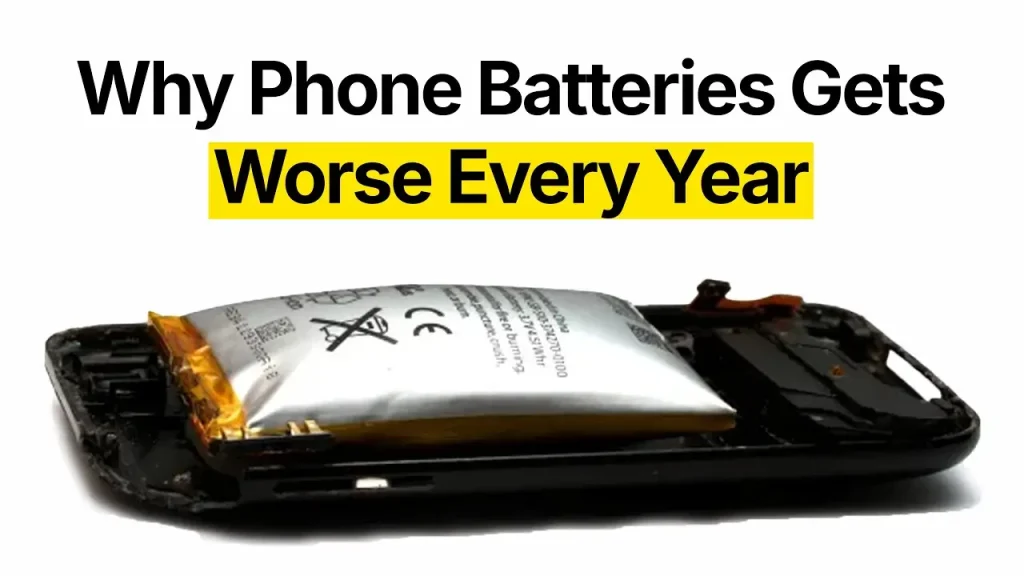
Every time ions move between electrodes, small, mostly irreversible side reactions occur within the battery. Over thousands of these cycles, several things happen:
Electrode Material Breaks Down
The physical structure of the electrodes slowly degrades with repeated use, reducing their ability to hold and release lithium ions as efficiently as before.
A Protective Layer Thickens Over Time
A thin layer called the solid electrolyte interphase (SEI) forms on the anode and is actually necessary for normal battery function. However, this layer gradually thickens with continued use, consuming some of the available lithium ions and slightly reducing the battery’s effective capacity.
Electrolyte Breaks Down Gradually
The electrolyte itself can degrade chemically over time, becoming less effective at facilitating ion movement between electrodes.
Lithium Ions Become Permanently Trapped
Some lithium ions get permanently trapped within the battery’s structure during these side reactions, meaning they’re no longer available to participate in future charge cycles, directly reducing total capacity.
None of this happens because of a defect. It’s simply the natural, expected outcome of how lithium-ion chemistry works, affecting every battery of this type, regardless of brand or device.
Key Factors That Accelerate Capacity Loss
While some degree of capacity loss is unavoidable, several factors speed up the process considerably.
Heat
High temperatures accelerate nearly all of the chemical side reactions described above. This is one of the most significant, controllable factors affecting how quickly any battery loses capacity over its lifetime.
Charge Cycles
Each full charge-discharge cycle contributes a small amount of permanent wear. A “cycle” doesn’t have to happen all at once; using 50% of your battery twice, for example, generally counts as roughly one full cycle in terms of cumulative wear.
Time Spent at Full Charge
Keeping a battery at or near 100% for extended periods places it under higher voltage stress, which can accelerate degradation compared to keeping it within a more moderate charge range.
Time Spent at Very Low Charge
Similarly, letting a battery sit at very low charge levels for long stretches, or frequently draining it close to empty, can also contribute additional stress over time.
Fast Charging
Higher charging speeds generate more heat during the charging process, contributing somewhat to long-term wear compared to standard charging speeds, even though most modern devices manage this reasonably well.
Simple Age
Even a battery that’s barely used will still degrade slowly over time, since some of these chemical changes occur gradually regardless of active use, though usage-related factors typically accelerate the process far more than passive aging alone.
Does Every Battery Type Lose Capacity the Same Way?
Not entirely. While lithium-ion batteries dominate consumer electronics, other rechargeable battery types degrade somewhat differently:
| Battery Type | Common Use | General Degradation Pattern |
|---|---|---|
| Lithium-ion (Li-ion) | Phones, laptops, EVs | Gradual capacity loss from cycling, heat, and voltage stress |
| Lithium Polymer (LiPo) | Thin devices, drones | Similar to Li-ion, often more sensitive to physical stress and swelling |
| Nickel-Metal Hydride (NiMH) | Older rechargeable devices, hybrid vehicles | Different aging pattern, including a “memory effect” in some older designs |
| Lead-Acid | Cars, backup power systems | Degrades through sulfation and plate corrosion over repeated cycles |
Lithium-ion remains the dominant choice for most modern consumer electronics specifically because it offers a strong balance of capacity, weight, and reasonably manageable long-term degradation compared to older battery chemistries.
Capacity Loss vs. Battery Failure
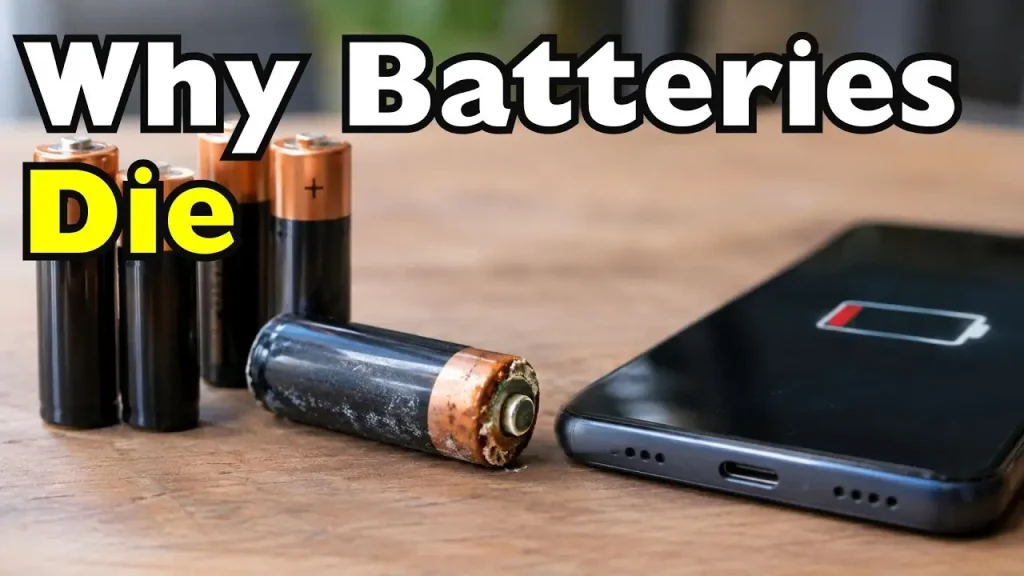
It’s worth distinguishing between gradual capacity loss, which is normal, and sudden battery failure, which isn’t.
- Capacity loss is slow and expected, showing up as reduced runtime over months or years of normal use.
- Battery failure can involve sudden swelling, failure to hold any meaningful charge, overheating, or the device shutting down unexpectedly even at higher charge percentages.
If you notice signs of failure rather than gradual decline, especially physical swelling or excessive heat, it’s worth having the battery inspected or replaced by a professional rather than continuing to use it.
Can Lost Capacity Ever Be Restored?
No, not through software or simple maintenance tricks. Once the chemical side reactions inside a battery have occurred, the resulting capacity loss is permanent. No charging pattern, app, or setting can reverse this degradation once it’s happened.
The only way to restore a device’s original battery capacity is a physical battery replacement, swapping in a new battery with fresh, undegraded chemistry.
How to Slow Down Capacity Loss
While you can’t stop capacity loss entirely, you can meaningfully slow it down:
- Avoid excessive heat exposure, since this is one of the most significant, controllable factors in battery longevity.
- Use manufacturer-recommended or certified chargers, since these are more likely to regulate voltage and current safely and consistently.
- Avoid consistently keeping your device at 100% or 0% for long periods, when practical, favoring a more moderate charge range instead.
- Enable optimized or adaptive charging features, if your device offers them, since these are specifically designed to reduce time spent at full charge.
- Avoid unnecessary fast charging when you’re not in a hurry, since standard charging speeds generate less heat.
- Store devices with partial charge, not fully empty or full, if they won’t be used for an extended period, since both extremes can accelerate long-term degradation during storage.
When Capacity Loss Becomes a Real Problem
Eventually, most users reach a point where reduced capacity noticeably affects daily usability, whether that means more frequent charging, shorter device runtime, or in more advanced cases, unexpected shutdowns. At this stage, a battery replacement, when possible, is often a more practical and cost-effective solution than replacing the entire device, provided the rest of the hardware still meets your needs.
Frequently Asked Questions
Is it normal for batteries to lose capacity even with careful use?
Yes. Even with ideal charging habits, some capacity loss is unavoidable over time, since it stems from fundamental battery chemistry rather than specific usage mistakes alone.
Does fast charging significantly reduce battery lifespan?
It contributes somewhat due to increased heat generation, but modern devices are generally designed to manage this safely under normal, everyday use.
Can I reverse battery capacity loss through software?
No. Capacity loss results from permanent chemical changes inside the battery and cannot be restored through software, settings, or charging habits once it has occurred.
How much capacity loss is considered normal after a year or two?
This varies significantly based on usage patterns, charging habits, and environmental conditions, so there’s no single universal number that applies to every device or situation.
Do all rechargeable batteries eventually need replacement?
Yes, eventually. Since capacity loss is a natural part of how rechargeable batteries function, all of them will eventually reach a point where replacement becomes necessary for continued reliable use.
Does temperature really make that much difference to battery lifespan?
Yes, heat is widely regarded as one of the most significant accelerating factors in battery degradation, often having a bigger impact than charging habits alone.
Conclusion
So, why do batteries lose capacity? It comes down to the natural chemistry inside every rechargeable battery: each charge cycle causes small, permanent changes to the electrodes, electrolyte, and internal structure, gradually reducing how much energy the battery can store. While this process can’t be stopped entirely, understanding what accelerates it, particularly heat, extreme charge levels, and frequent fast charging, gives you real, practical ways to extend your battery’s useful lifespan.
Eventually, every rechargeable battery reaches a point where replacement is the only real solution, but good habits along the way can meaningfully delay that point. For more clear, practical breakdowns of the technology inside your everyday devices, apkmunna remains a solid resource to keep exploring.